l’actualité
News of the Day
-
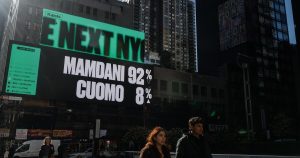
The economist Geoff Mann’s treatise on prediction markets is worth your time. He details the agrarian history of the futures market and condemns the regulatory environment that has allowed Kalshi and Polymarket to operate as shadow gambling operations in plain sight.
There is an interesting anecdote regarding the purported “father of prediction markets,” George Mason University economist Robin Hanson, and his thoughts on allowing “insider trading” in this space. Hanson has argued that if accurate prices are the goal, “you definitely want to allow insiders to trade,” even if that discourages other people from betting. Taken purely as a comment on extracting the markets’ theoretical value, and not as an endorsement of those in the know profiting from secrets, it’s an interesting idea. Putting aside the immoral and pervasive sports betting that makes up the bulk of transactions, what if platforms like Kalshi really did operate as a place for whistleblowers and leakers to wager on their intel against an unknowing public? Would that be a worthwhile trade for society?
If this were how the markets actually worked, the way the system would dovetail with journalism would be fascinating. Would sources and information be harder or easier to come by? Would breaking news trail the market, or help drive massive shifts in capital?
 lrb.co.uk
Geoff Mann · What’s the truth? Prediction Markets
-
Thomas Frank’s leading essay in the latest Harper’s issue highlights the ignominious gerrymandering battle that has preceded the 2026 midterms. While lament for this development is understandable, I think he goes too far by suggesting that “ordinary people voted to effectively disenfranchise their neighbors” and that common citizens are “yearning for a chance to do injury to people who think differently.”
He makes this point because the electorates in California and Virginia both passed plans to reconfigure the state in a way that maximized blue representation, in direct response to the same actions in red states like Texas and North Carolina. But have voters in California and Virginia really done anything differently than voters in red states have in the past? Yes, they made their support for gerrymandering more explicit by voting on a measure with political cartography as its sole focus, but I would argue that Republican voters have been implicitly supporting the practice with their votes for decades now.
Frank asks facetiously: “Besides, what else were these states supposed to do? Stick to the honor system while Republicans looted and stole?” But what is the alternative, truly? If Democrats didn’t devise a retaliatory plan to balance out the harm done in Texas, that might very well have decided the balance of power in Congress, which might mean the difference between impeaching the worst president in American history and enduring his fascistic rule for two more years without any guardrails or pushback. Frank is right that the practice is anti-democratic in the way in dilutes the value of an individual’s vote, but the Democratic Party learned the hard way that the whole “when they go low, we go high” approach is suicidal. It’s nice to see the party and its supporters push back a bit, and it certainly isn’t in a way that “injures” or “disenfranchises” their neighbors.
 harpers.org
The Golden Age of the Gerrymander
-
Covered head-to-toe in gaudy tattoos, a cheesy dribble package and awful shot selection. LaMelo ball is the most Park player to ever exist in the NBA.
-
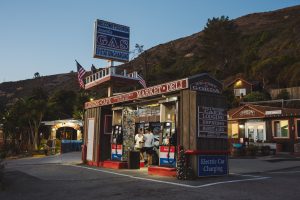
I have fond memories of my Uncle “Me” driving my Aunt “B”, my mom and I from Los Angeles to San Fransisco along the Pacific Coast Highway. Fun story on a little coastal stop, where the country’s most expensive gas is worth it for the view.
 nytimes.com
$10 a Gallon at This California Gas Station by the Sea
-
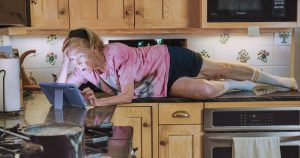
Much of the public discourse and legal pushback against our technocratic overlords has been about how algorithms are negatively impacting our young, but it is quite clear that the effect is mirrored on the other end of the age spectrum. Toddlers and old-timers are both being infantilized by screens, leaving a small segment of the population in the middle capable of navigating these currents of slop. This harrowing story about how feeds are starting to hasten the cognitive deterioration for our elderly is worth your time.
 nymag.com
No iPad Till After Dinner, Mom